
Retailers Who Don’t Raise Prices Now Will Go Bankrupt
- Paul Edwick

- Mar 3, 2025
- 4 min read
1 The Cost Crisis is Coming – Why Wait?
Why aren’t we raising prices now, moving ahead when we know costs are going to hit hard over the coming months?
Retailers and importers are in a precarious position—not because they don’t recognize rising costs ahead, but because too many are waiting for absolute clarity before acting. It’s an understandable instinct, but a dangerous one.
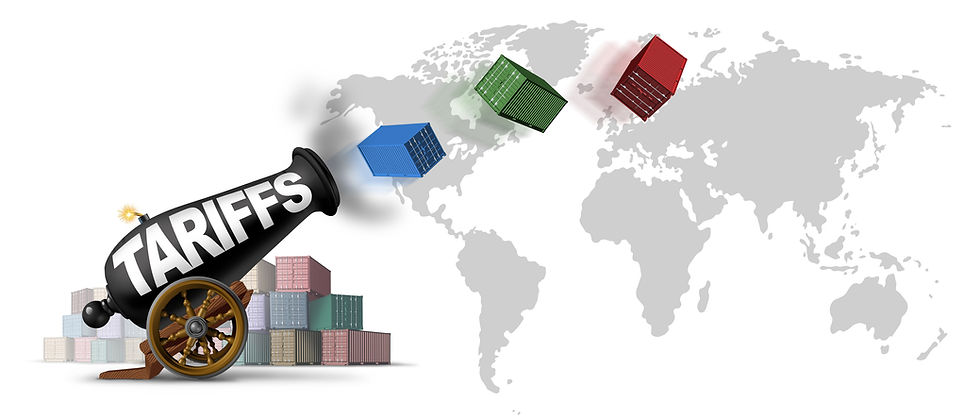
Yes, tariff announcements and actual executive orders are not always the same. However, in the past few days, major tariffs have now been confirmed:
25% on imports from Mexico
25% on imports from Canada
A second 10% tariff on imports from China
These are no longer hypothetical—they are set policy. Businesses still hesitating to react will face the consequences of increased costs without a proper strategy to protect their margins and cash flow.
The smartest importers and retailers are already taking action—some discreetly testing price increases, others securing better cash flow positions in preparation for rising costs.
The right question is not “Should I raise prices?” but rather “Do I want to be in control of my cash flow, or at the mercy of last-minute cost shocks?”
Moreover, businesses are not operating in a static market. Consumers, too, are reacting and the pace will step up. Some are bringing forward purchases to avoid anticipated price hikes, creating short-term demand spikes that mask the long-term impact of higher costs. Others may delay spending altogether once price increases take full effect, leading to an unpredictable decline in sales volume. The ability to navigate this volatility requires planning—waiting until the last minute removes that flexibility.
Those who prepare now will be in a stronger financial position when the dust settles, while those who hesitate risk being pushed out of the market by the realities of higher tariffs and freight costs.
2. The Case for Raising Prices Now
A. Tariffs & Freight Costs Are Already Locked In
Tariffs have been officially implemented – the uncertainty is no longer if but how fast businesses will adapt.
Freight rates are already increasing as importers rush to beat tariff deadlines. With more congestion at ports and higher demand for shipping space, delaying action will only lead to increased costs down the line.
If you wait to adjust prices, you absorb the cost upfront—damaging cash reserves. Reacting late means businesses will have to cover increased costs from their existing capital, leading to liquidity strain when they need it most.
B. Cash Flow vs. Profitability: The Critical Distinction
Profitability is meaningless if liquidity runs dry. Many businesses focus on protecting margins, but without cash flow, even a profitable business can collapse due to an inability to meet short-term financial obligations.
Retailers who delay price increases will burn cash faster than expected. Holding off on price increases means absorbing higher costs for longer, leading to a rapid depletion of working capital and an inability to reinvest in inventory or operations.
A tight liquidity position limits future purchasing power, making inventory management even harder in Q3/Q4. Without a buffer, businesses will struggle to secure stock later in the year, increasing the risk of shortages or missed sales opportunities.
C. Different Strategies for E-Commerce vs. Brick-and-Mortar Retailers
E-commerce retailers have more flexibility to adjust pricing dynamically, test price points, and respond to consumer behavior shifts in real time.
Brick-and-mortar retailers face constraints with in-store price consistency and consumer expectations, making sudden increases riskier.
Hybrid businesses must balance pricing strategies across physical and online channels to avoid price perception issues and customer pushback.
3. The Consequences of Not Raising Prices Now
A. Cash Shortages by Q3/Q4 2025
Deferred price increases mean businesses absorb extra costs for months. By waiting, businesses accumulate costs they do not pass on to consumers, leading to shrinking margins and higher financial stress.
By the time pricing adjustments happen, cash reserves will already be strained. If price increases only come as a reactionary measure when liquidity is low, businesses may find themselves unable to cover operational expenses.
This impacts payroll, new inventory, and expansion plans. A weak cash position limits hiring, inventory purchases, and market expansion efforts, making businesses more vulnerable in an increasingly competitive environment.
B. Inventory & Supply Chain Risks Increase
If tariffs escalate further or supply chains slow down, businesses with weak cash positions won’t be able to restock. Lack of available funds to purchase inventory at higher costs could lead to severe stock shortages, affecting customer retention.
Higher costs + longer lead times = stockouts or overpriced inventory. Delayed inventory replenishment means businesses either run out of stock or are forced to buy at inflated prices, further squeezing profit margins.
C. Consumer Demand Shifts & Pricing Sensitivity
Some consumers will frontload purchases to avoid price hikes, creating a temporary demand surge that masks long-term sales declines.
Once price hikes are fully implemented, demand may drop, especially in discretionary categories, leading to unpredictable revenue cycles.
Waiting until the market reacts is dangerous—retailers need time to model different pricing strategies now.
4. The End Goal: A Strong Cash Position by January 1, 2026
Retailers need to shift from a “growth mindset” to a “survival-first” strategy. This is not the year to prioritize aggressive expansion—ensuring financial stability should be the primary focus.
The goal is to reach 2026 with strong liquidity, not just to maintain market share. Businesses that hold back on price increases may retain customers temporarily, but at the cost of financial health.
Raising prices now is not about greed—it’s about ensuring survival. Businesses that adjust pricing strategically will have the cash reserves needed to navigate the coming months, while those who delay may find themselves in a financial crisis.
5. Conclusion: The Smartest Move is Acting Before It’s Too Late
The best-positioned businesses in 2026 will be those that took action in early 2025. Companies that proactively adjust to cost increases will have the stability to outlast competitors who hesitate.
Delaying price increases is a luxury most retailers can’t afford. Those who wait too long will be forced to make drastic changes later, which may come at a greater cost to their business and customer relationships.
The decision isn’t whether prices will rise—it’s whether you’ll control the process or be forced into it later.
For those who move now, the transition will be strategic and manageable. For those who wait, it will be sudden and painful. The choice is yours.


Comments